
Conventional boilers — also called regular or heat-only
The system most older Kent homes were built with. Sometimes worth keeping, sometimes worth leaving behind.
Not sure which type you need? The quote tool asks about your home and works it out with you.
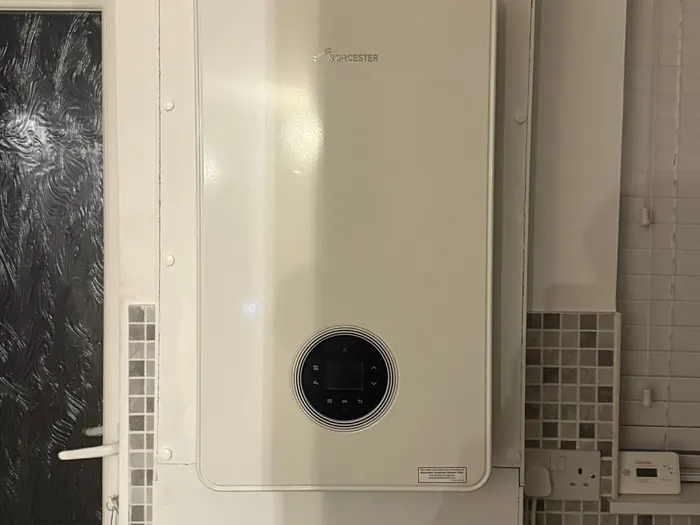
What is a conventional boiler?
A conventional boiler — you will also hear regular, heat-only or traditional — heats your radiators and a hot-water cylinder, but relies on tanks in the loft rather than mains pressure. There is a cold-water storage tank and a smaller feed-and-expansion tank up there, and the pump and controls usually sit separately in the airing cupboard.
It is the setup most East Kent houses built before the 1990s were fitted with, and there are still a great many of them in Deal, Dover and the villages.
Modern versions are condensing and far more efficient than the ones they replace, so a like-for-like swap is a perfectly respectable choice — it is just no longer the default.
The honest pros and cons
We fit all three types. We have no reason to talk you into the wrong one.
Where it wins
- Gentle on old pipework — no mains pressure forced through ageing joints
- Works fine where incoming mains pressure is poor
- An immersion heater gives you hot water even if the boiler fails
- Usually the cheapest and quickest option if you already have one
- Can supply several outlets at once from the cylinder
Where it falls down
- Tanks in the loft take up space and can freeze in a bad winter
- Gravity-fed pressure means weak showers upstairs unless pumped
- More parts spread around the house, so more to go wrong
- Loses heat from both the cylinder and the tanks
- Slowest to recover once the stored hot water runs out
Is a conventional boiler right for your home?
Find the row that sounds most like your house.
| Your home | Verdict | Why |
|---|---|---|
| Older house, original pipework, working system | ✓ Good fit | A like-for-like swap is often the sensible, economical call. |
| Low incoming mains pressure | ✓ Good fit | Gravity systems do not care about a weak main — combis very much do. |
| Listed or hard-to-alter property | ✓ Good fit | Least disruptive option where pipework cannot be reworked. |
| You want the loft space back | ~ Possible | A system boiler removes the tanks while keeping stored hot water. |
| One bathroom, want a modern simple setup | ✕ Not ideal | A combi will serve you better and free up two spaces. |
| Weak upstairs showers you are fed up with | ✕ Not ideal | Staying conventional keeps the problem. Upgrade the system, not just the boiler. |
What size conventional boiler do I need?
As with a system boiler, sizing follows the radiators and the cylinder rather than tap flow. Broadly:
| Your home | Typical size |
|---|---|
| Small house, up to 10 radiators | 12–15 kW |
| 3 bed house, 10–15 radiators | 15–18 kW |
| 4+ bed house, 15–20 radiators | 18–24 kW |
Old conventional boilers were routinely oversized by a wide margin. Fitting the same output as the one coming out is usually the wrong move — a properly sized modern boiler will be smaller and cheaper to run.
What does a conventional boiler cost to fit?
A like-for-like conventional boiler replacement in a typical East Kent home lands between £3,200 and £4,150 fitted, including VAT. Where you sit in that range comes down to the size of boiler, the brand and warranty you choose, and how much pipework needs reworking.
That is a guide, not a quote. We are not going to pretend a number off a web page is your price — the only way to know is to look at your home. The quote tool asks six questions and gives you a real fixed price for your house, with the boiler, the fitting and everything in the quote included. It takes about two minutes.
Replace like-for-like, or upgrade?
This is the real decision on a conventional system, and it is worth thinking about properly rather than defaulting to whatever is already there.
Replace like-for-like if the system works, the pressure is fine, the pipework is old, and you simply want a more efficient boiler. It is the quickest and cheapest route, and there is nothing wrong with it.
Upgrade to a system boiler if the loft tanks annoy you or the upstairs showers are weak — you keep the stored hot water but gain mains pressure and lose the tanks. Upgrade to a combi if you have one bathroom and want the cupboard and loft back, accepting that it is a two to three day conversion rather than a swap.
We will tell you honestly which of the three makes sense for your house. Sometimes the answer really is the cheapest one.
Common questions
What is the difference between a conventional and a system boiler?
Both store hot water in a cylinder. A conventional boiler is fed by tanks in the loft and relies on gravity for pressure; a system boiler is sealed, fed straight off the mains, and has the pump and expansion vessel built in. The practical difference is pressure — system boilers give strong showers upstairs, conventional ones often do not.
Is a conventional boiler out of date?
The setup is traditional, but modern conventional boilers are condensing and efficient. They are still made, still fitted and still the right answer in plenty of older houses — particularly where mains pressure is poor or the pipework is not up to being pressurised.
Can I get rid of the tanks in my loft?
Yes, by moving to a system boiler or a combi. A system boiler removes the tanks and keeps the cylinder; a combi removes both. Either is a bigger job than a straight swap, and the combi conversion is the bigger of the two.
Why is my upstairs shower so weak?
Almost always gravity. On a conventional system the pressure upstairs comes from the height of the loft tank above the shower, which is not much. A shower pump can help, or moving to a system boiler solves it properly by putting the whole house on mains pressure.
Can I just replace the boiler and keep everything else?
Often yes, and it is the cheapest route. We would want to check the cylinder and the controls at the same time — fitting an efficient new boiler onto a tired cylinder and 1980s controls throws away a good part of the benefit.
How long does a conventional boiler last?
Fifteen years is a fair expectation with annual servicing, and we see plenty older. As with any boiler, once repairs start coming round regularly and parts get harder to find, replacement usually costs less over the following few years than nursing it along.
Still weighing it up?
The other two types, explained the same way.
Conventional boiler installation across East Kent
We fit conventional boilers from Deal and Dover across to Canterbury, Folkestone and Thanet — Gas Safe registered (№ 2836), 25 years at it, and next-day installation wherever we can.